If your lights flicker, breakers trip, or your panel hums when the heat kicks on, your panel isn't just struggling — it's telling you it's reached its limit. And winter is the ultimate debt collector.
We see this pattern every year. Homeowners notice the early signs in October and wait. By January they're calling with no heat, partial outages, or worse. Here's what your panel is trying to tell you — and what happens if you don't listen.
Frequent Breaker Trips
Breakers are designed to trip to protect your home, but if you're resetting the same breaker repeatedly — especially when running space heaters, microwaves, or vacuums — that circuit is overloaded. A breaker that trips once is doing its job. One that trips constantly is telling you the underlying demand has outgrown the circuit.
Flickering or Dimming Lights
If your lights dip when the furnace or heat pump starts, that's a voltage drop. A brief flicker in an older home can be normal, but consistent dimming means your system is operating right at its limit — and winter hasn't fully arrived yet.
A Warm Panel or Visible Discoloration
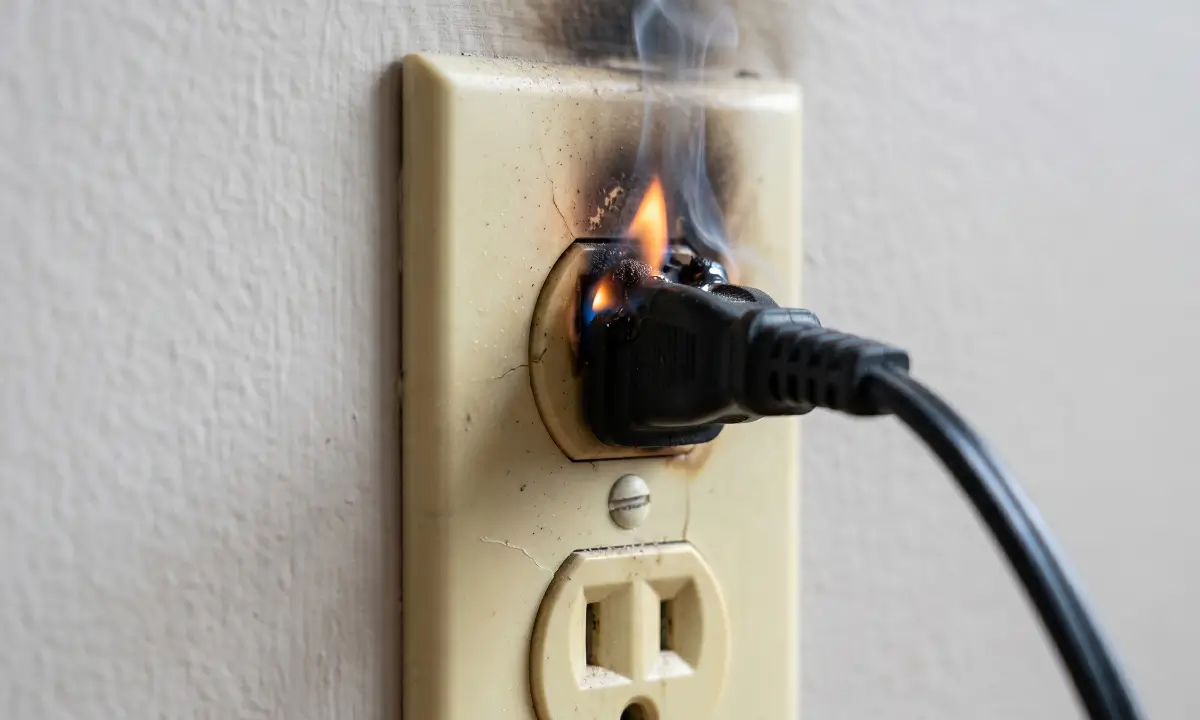
Your electrical panel should never feel warm to the touch. Warm breaker switches, burn marks, or dark discoloration around the panel are all signs of heat buildup — and heat is what starts electrical fires.
Buzzing or Humming Sounds
A healthy panel is silent. Buzzing or sizzling typically indicates loose connections, failing breakers, or electrical arcing. This isn't something to monitor and revisit — it's something to address immediately.
Overuse of Power Strips and Extension Cords
If you're routinely daisy-chaining power strips or running extension cords to manage your outlets, your system wasn't designed for your current electrical demand. That's a behavioral red flag that often precedes a panel problem.
Outdated Panel Brands
Some panels are genuinely dangerous even when they appear to be functioning normally. Federal Pacific (FPE) and Zinsco panels are both known for failing to trip when overloaded — which eliminates your home's primary safety mechanism without any visible warning.
The scenario we see most often starts with flickering lights that a homeowner notices but waits on. Then winter arrives. A 1,500-watt space heater gets plugged in, and behind the scenes the panel — already near capacity — begins building resistance. Rather than tripping, it starts to overheat slowly. After repeated use, the breaker melts onto the bus bar, half the house loses power, and the breaker won't reset. Now you're dealing with a physically damaged panel, no heat in part of the home, and an emergency service call during the coldest stretch of the year.
Winter doesn't create the problem — it exposes it.
Heating systems draw significant power at startup, lights stay on longer, and households spend more time indoors running more devices. That combination puts panels at sustained peak load in a way that milder months never do. Add a space heater — which can consume nearly an entire 15-amp circuit on its own — and there's almost no headroom left for anything else.
Holiday lighting and decorations add continuous draw for weeks, and for a panel already near capacity, that can become the tipping point. There's also a physical component: cold air combined with the heat generated inside the panel causes metal components to expand and contract repeatedly. Over time, that loosens connections. Loose connections create resistance, resistance creates heat, and heat creates failure.
Older homes face an additional challenge. Panels installed decades ago were built for a different era of electrical demand. Modern homes now routinely include high-end appliances, home offices, EV chargers, and advanced HVAC systems — loads that simply weren't anticipated when many of these panels were sized.
It's the question we hear most often, and the honest answer is: maybe — but only if you significantly change how you use electricity in the meantime.
In the short term, stagger high-draw appliances so you're not running a heater, microwave, and vacuum simultaneously. Avoid space heaters where possible, or restrict them to dedicated circuits. Check your panel periodically — it should never feel warm — and keep the area around it clear so you have immediate access if something fails.
What you should never do: reset a tripping breaker repeatedly, ignore a burning or ozone smell, use extension cords with space heaters, or swap in a larger breaker to stop the tripping. That last one is particularly dangerous — oversized breakers allow wiring inside walls to carry more current than it was designed for, and that's how house fires start.
A panel that's struggling through mild months will be pushed to its limit when sustained heating demand arrives — winter doesn't introduce the weakness, it just forces it into the open. When panels fail, they tend to fail at the worst possible time: it's cold, everyone else is calling, and availability is limited. You lose control of the timing entirely.
And perhaps most importantly: a breaker that trips is a warning. A breaker that stops tripping is a disaster. Once your system stops protecting itself, the risk shifts from inconvenience to genuine danger.
If you're already managing your electricity — turning things off to use other things, avoiding certain outlets, watching your breakers closely — your panel is past its limit. Waiting won't change that. It just means you'll hit that limit at the worst possible moment.
If you're seeing any of these signs, the right move is a professional evaluation before winter pushes your system to its breaking point. Call us today to schedule a panel inspection.
The clearest signs are frequent breaker trips, flickering lights when large appliances start, and having to manage which devices you run simultaneously. A licensed electrician can assess your current load and determine whether an upgrade is needed.
Yes. A panel that feels warm to the touch indicates heat buildup, which is a fire risk. This should be evaluated by an electrician as soon as possible — don't wait.
Arcing occurs when electricity jumps across a gap between loose or damaged connections. It generates intense heat and is one of the leading causes of electrical fires. Buzzing or sizzling sounds from your panel are a common indicator.
Yes. Both brands have documented histories of failing to trip when overloaded, which means the panel stops protecting your home. If you have either brand, an inspection and likely replacement is strongly recommended regardless of whether you're seeing symptoms.
A standard 1,500-watt space heater draws around 12.5 amps on a 120V circuit — leaving very little headroom on a standard 15-amp breaker. Running one alongside other devices on the same circuit is a common cause of tripped breakers and overheating.
If your panel is over 25 to 30 years old, you're regularly tripping breakers, you're adding significant new loads like an EV charger or HVAC system, or you have a known problem brand, an upgrade should be on your radar. A professional evaluation will give you a clear picture of where you stand.
