When the first hard freeze hits Albuquerque, the calls start — and most of them are systems that gave warning signs weeks earlier. Number One has serviced furnaces, boilers, and heat pumps across the metro since 2005, and our approach starts with diagnosis rather than a parts list. We measure, test, and explain what we find before recommending anything.


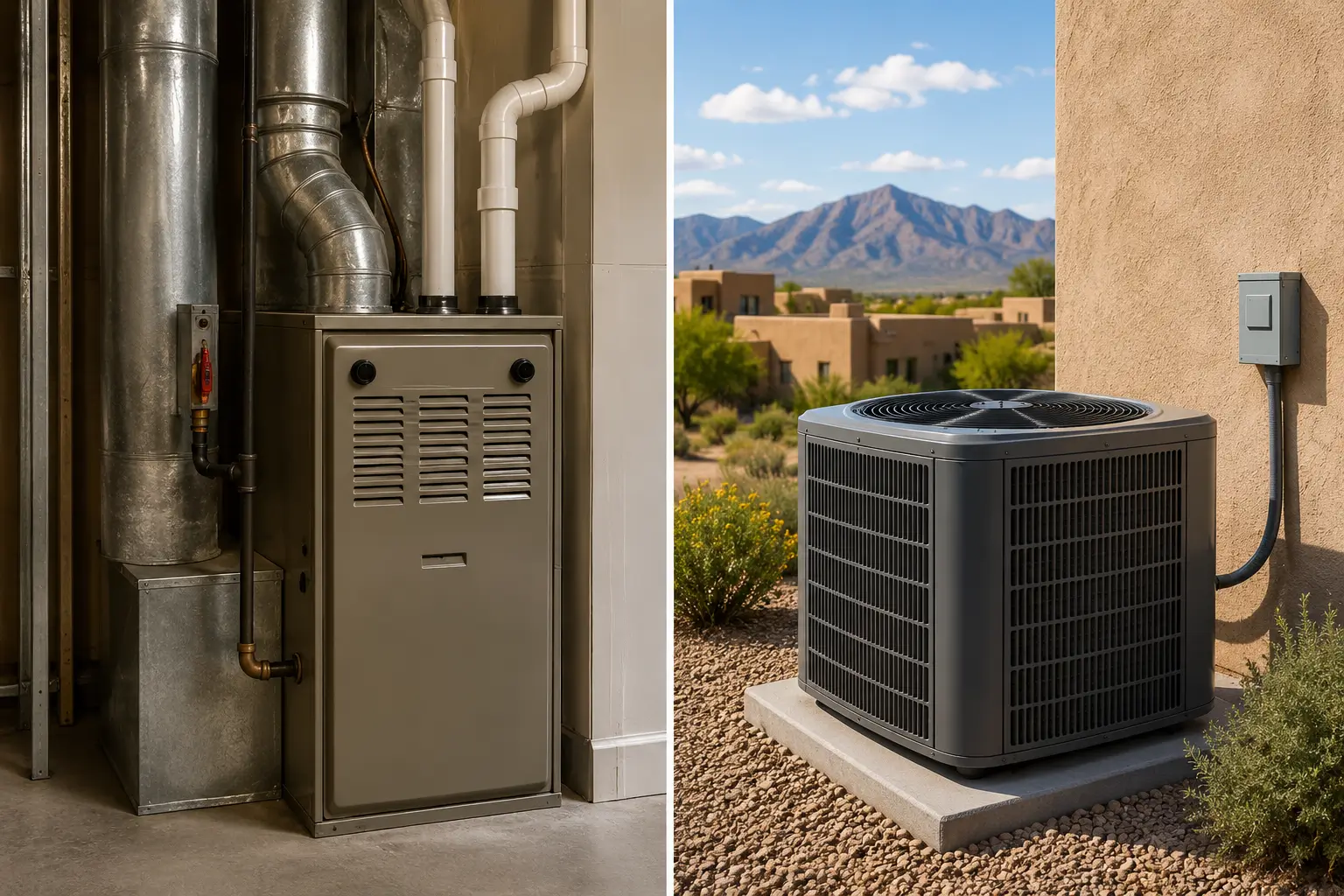
Most Albuquerque homes heat with natural gas, and the infrastructure is everywhere. But heat pumps have changed considerably, and in a climate with mild daytime highs and sharp overnight lows, the question is worth asking rather than assuming.
A gas furnace delivers consistent high-temperature air regardless of what the outdoor temperature does — which is what matters on the coldest January mornings. Its output does not fall off when conditions get extreme.
A modern heat pump moves heat rather than creating it — substantially more efficient across most of Albuquerque's heating season. Its output does drop as outdoor temperatures fall, and sizing it correctly for our overnight lows is where these installations go wrong.
There is no single right answer — it depends on your insulation, your existing ductwork, whether you already have gas service, and how the system needs to handle the shoulder seasons. We walk through the tradeoffs honestly, including the cases where keeping what you have is the better decision.

Servicing heating systems across this metro since 2005 means we have seen the failure patterns this climate and this elevation produce.
Altitude changes how a furnace must be configured — Albuquerque sits above five thousand feet, where thinner air means less oxygen for combustion. A furnace ships calibrated for sea level, and installing it here without adjustment leaves it burning fuel it cannot fully combust. Manufacturers publish derate specifications and high-altitude conversion kits for exactly this reason.
The damage shows up slowly — sooting on the burners, a flame that rolls rather than burning cleanly, a heat exchanger working under stress it was never designed to carry, and in the worst cases incomplete combustion producing carbon monoxide. None of it announces itself on day one.
It is one of the most common things we find on systems installed by crews unfamiliar with this market. When we inspect a furnace in Albuquerque, verifying it was configured for this elevation is part of the diagnostic — not an upsell.
Most heating failures we see in January were preventable in October.
Members earn up to $600 annually and can bank up to $3,000 in credits. No other cooling company in Albuquerque offers anything like it.

At Number One Plumbing, AC, Solar & Electric, we provide professional heating services in Albuquerque, including furnace repair, maintenance, and installation for residential and commercial systems. Locally owned and operated since 2005, our licensed technicians handle everything from routine tune-ups to complex heating system repairs, keeping your home or business warm when it matters most.
We specialize in keeping heating systems running efficiently through every season. Whether you need fast, reliable heating repair, a new furnace installation, or preventative maintenance to extend the life of your system, our team delivers solutions tailored to your needs. We also offer 24/7 emergency heating service, so you are never left without heat when temperatures drop.
At Number One, we are committed to quality workmanship, clear communication, and upfront pricing. From small repairs to full system replacements, you can count on our team for dependable service and lasting results — backed by our Satisfaction Pledge.
Do not let a faulty heating system leave you in the cold. Whether you need repair, replacement, or routine maintenance, Number One Plumbing, AC, Solar & Electric is your trusted choice for Albuquerque heating. Contact us today at (505) 999-9567 to schedule your service.


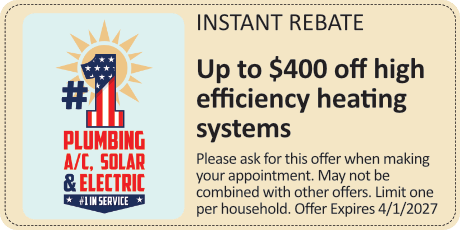

Number One Plumbing, AC, Solar & Electric makes it easy to afford the services you need for your home. Contact us today to learn more about our financing program.
Common questions we field from homeowners across the metro heading into heating season.
Early fall, before the first cold snap. Most heating failures here surface in the first genuinely cold week, when a system that sat idle for seven months is suddenly asked to run hard. Scheduling in September or October means finding problems on your schedule rather than on a twenty-degree night.
Burner inspection and cleaning, heat exchanger examination, gas pressure and combustion verification, blower motor and belt condition, safety control and limit switch testing, thermostat calibration, filter assessment, and a full cycle test. At our elevation it should also confirm the unit is configured correctly for altitude.
Dust that settled on the heat exchanger over the summer burns off the first few times the system runs. That is normal and usually clears within an hour or two. What is not normal is a smell that persists, smells acrid or electrical, or arrives with visible soot — those warrant shutting the system down and having it looked at.
Often you cannot tell visually, which is exactly why it matters. Warning signs include a yellow or flickering burner flame instead of steady blue, soot around the furnace, unusual window condensation, headaches or nausea that improve when you leave the house, and a carbon monoxide alarm. This is a safety issue rather than a comfort issue — if you suspect one, shut the system off and call. Technicians confirm it with combustion analysis and physical inspection, not guesswork.
The usual guidance is that if a repair costs more than half the price of replacement and the system is past ten years old, replacement is the better investment. Furnaces here typically run fifteen to twenty years. But age alone is not the deciding factor — a well-maintained twelve-year-old unit with one failed component is usually worth repairing. We give you the honest read either way, and our Satisfaction Pledge means you are not locked into a recommendation you are uncomfortable with.
Yes. Boilers and radiant systems are common in older Albuquerque and Santa Fe properties and require different expertise than forced air. We service, maintain, and repair them alongside conventional furnaces and heat pumps.
